April 2026 edition · Neighborhood news
Entertainment Zones
In California, entertainment zones allow bars and restaurants to sell alcohol for open-air consumption during permitted events.
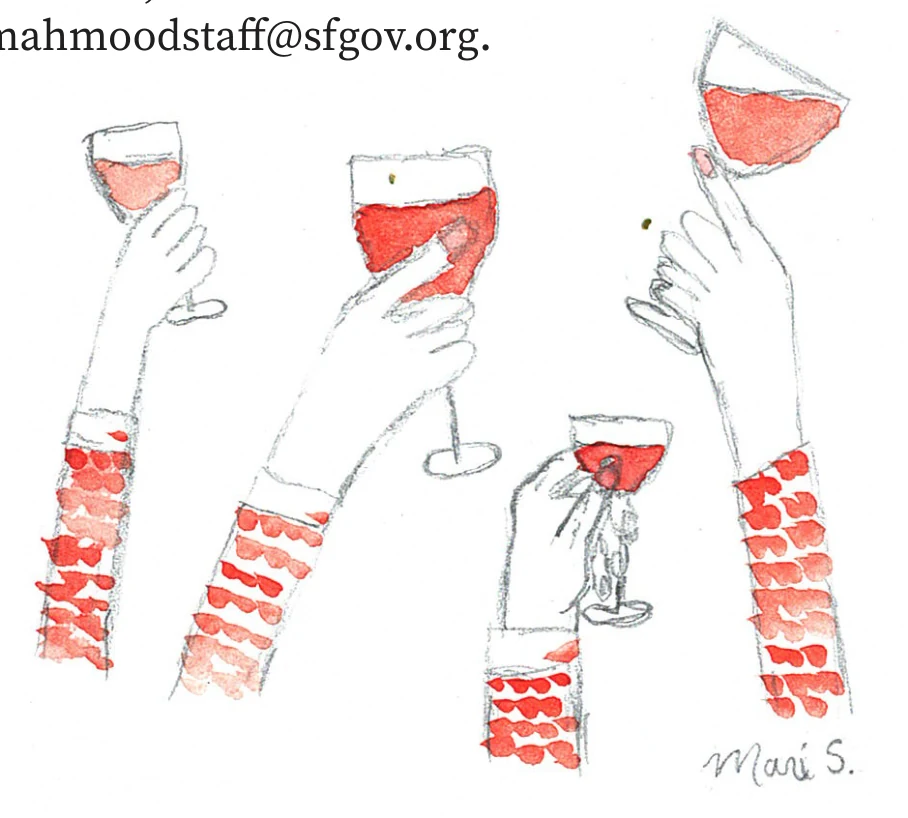
In California, entertainment zones allow bars and restaurants to sell alcohol for open-air consumption during permitted events. The state’s first zone launched in FiDi’s Front Street in June 2024, drawing over 21,000 attendees in its first year. San Francisco now has 21 zones active or pending, and the process was recently initiated for Lower Haight to get its own entertainment zone. We interviewed District 5 Supervisor Bilal Mahmood on this topic.
Lower Haight Local: Front Street proved the model works downtown, but Lower Haight runs on a different rhythm, more neighborhood bar than after-work crowd. Will it translate here?
Bilal Mahmood: Every entertainment zone is different. They’re meant to jump-start activities that are already happening and fit the existing character of that neighborhood. In the past, block parties typically brought in food trucks and outside vendors to sell drinks, which doesn’t benefit local businesses. Entertainment zones allow local bars and restaurants to sell drinks to customers, who can take them outside and move freely.
The most effective entertainment zones center around a few focused events. The Lower Haight Art Walk is a perfect example of an existing event that would be enhanced by an entertainment zone.
LHL: Senator Wiener’s legislation made this legally possible, but implementation lives at the city level. What is your role in activating a zone?
Mahmood: Every entertainment zone has to come from the community first. The neighborhood organization votes to say they want it. We help them coordinate with the Office of Economic and Workforce Development to create a management plan that ensures all neighborhood stakeholders are included and that there is a consistent plan for activations. Then, we draft and initiate legislation at the Board to authorize it, the mayor signs it, and it goes into effect.
LHL: Front Street businesses saw sales increase 700% to 1,500%. Are there guardrails to make sure that economic energy benefits local merchants and doesn’t accelerate displacement?
Mahmood: Entertainment zones exist because we do think displacement is an issue. What often happens during activations is that outside food vendors or food trucks come in that aren’t local businesses. Entertainment zones ensure that the local economy benefits from it. We want to see that 700% to 1,500% sales increase for Lower Haight businesses.
LHL: There was a block party last October on Waller Street. What does it take to get activations happening regularly, without the supervisor’s office funding every event?
Mahmood: We want to meet communities where they’re at. Not every community has the infrastructure or experience to hold ticketed events. The supervisor’s office can cover a portion of the fees for street closures to remove the barrier to entry for these events. If a neighborhood has the capacity to run something bigger, great. If not, we help them get started.
On March 9, Lower Haight Merchants and Neighbors Association (LoHaMNA) voted in favor of creating an entertainment zone in Lower Haight, and now it will work with Mahmood’s team to define the zone’s exact location and the management plan before it’s sent to the Board for approval. To get involved, contact LoHaMNA or Mahmood’s team at mahmoodstaff@sfgov.org.
Nandini Novarr is a San Francisco-based food and beverage writer and is enthusiastic about community driven missions.